Showing posts with label noodles. Show all posts
Friday, May 23, 2014
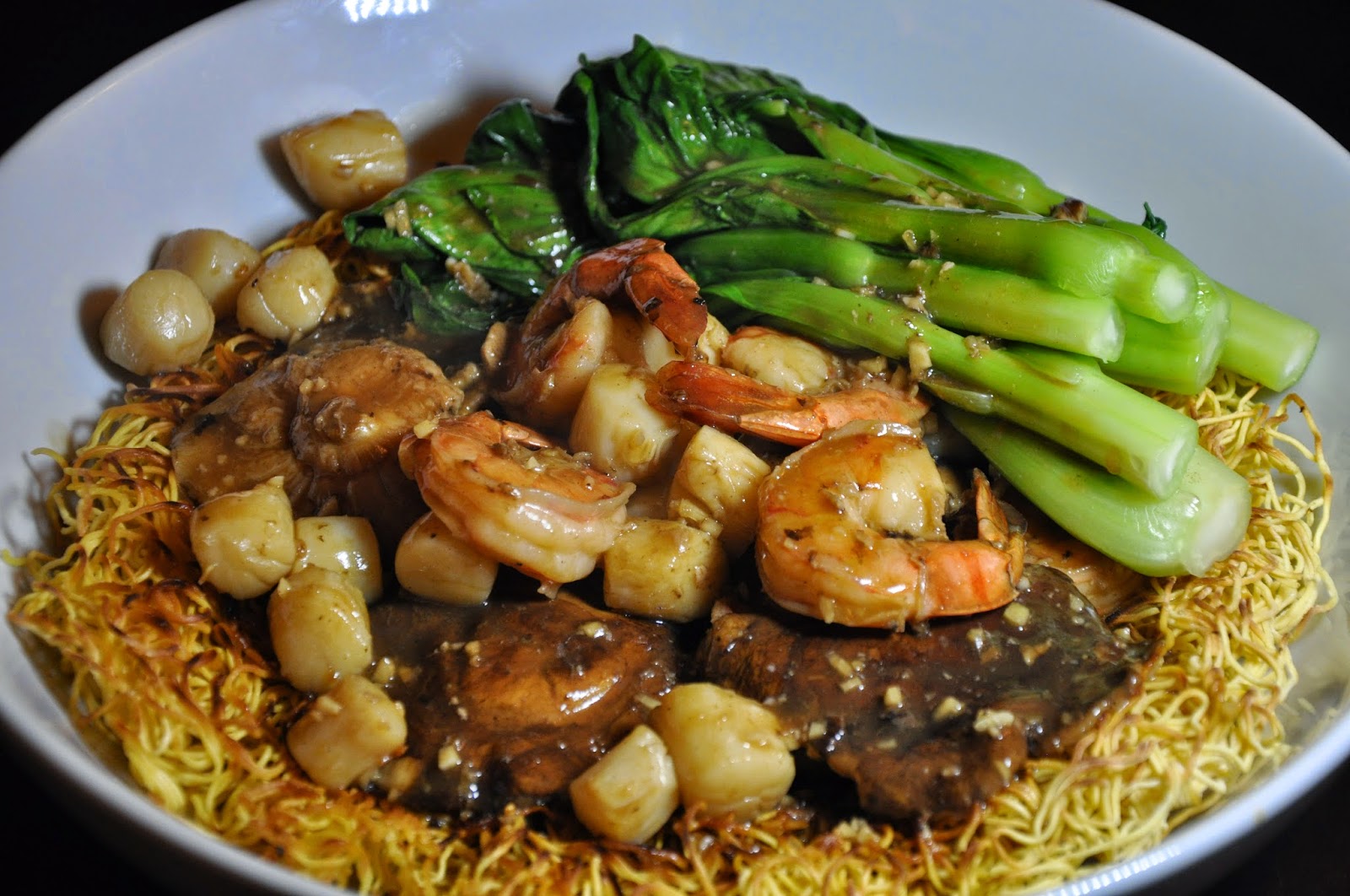
(Belated Again) Chinese New Year Meal #7: Crispy Pan-Fried Noodle Cakes with Seafood
Guess what? We finally finished our week of Chinese New Year meals! It only took a couple months... When I first started posting a week's worth of Chinese New Year meals on the blog I spent hours pouring over recipes trying to represent the different regions and cuisines of China. I wanted seven meals made from different ingredients, some spicy, some meaty, some vegetarian, some noodles, some dumplings... It was quite a process. This year I didn't have a lot of time to plan. And since I was so behind the ball in getting started I rushed into things a little. Fuchsia Dunlop is always a good source for a few Chinese New Year meals. I love all three of her cookbooks. In the past year or two I have come to rely more and more on Serious Eats for new recipes. I love that they make up their own recipes in addition testing out cookbooks. I also love that their recipes run the gamut of different types of Chinese cuisine. Four out of the seven Chinese New Years meals I made this year (including this one) were from Serious Eats. There were a few other recipes I found elsewhere, but for one reason or another they didn't make the cut. Some were a little too fusion-y, others involved ingredients that I couldn't find. But what tended to happen was that I stumbled across a recipe that I wanted to make more. This recipe for pan-fried noodles wasn't one that I originally planned on making. I don't typically make more than one noodle dish, but I really love pan-fried noodles. But other than the double-up on the noodles, I think we did a pretty good job of diversifying our meals. We did one Sichuanese dish with beef and another with chicken, one Taiwanese dish with pork belly, one Xinjiang dish with lamb, one Cantonese dish with seafood...
This dish was surprisingly successful. I was pretty happy with it. When we tried to make pan-fried noodles in the past we always ended up with burnt noodles that stuck to the wok, which resulted in burnt noodles and made it far more difficult to transfer the noodles from the wok in order to flip them over and cook the other side. But these worked out pretty well! There was some sticking on the first side after we added the water, but the second side worked perfectly. And the process of parboiling the scallops and blanching the greens worked out really well because both ended up perfectly cooked. The original recipe on Serious Eats calls for the addition of calamari and fish balls, but the grocery store was out of calamari and I don't really like fish balls so I decided to leave them out. I really liked the combination of bay scallops and shrimp, but I might try the calamari next time if it was available.
Recipe after the jump!
Sunday, April 13, 2014
(Belated, Again) Chinese New Year Meal #3: Laghman (Ban Mian)
There are a few cookbooks out there that I have been thinking about buying for years. Some of them are by cookbook authors whose cookbooks we already own. One cookbook that I have been thinking about buying for years is Beyond the Great Wall: Recipes and Travels in the Other China by Jeffrey Alford and Naomi Duguid. But everytime I convince myself that I don't need yet another cookbook. We easily have 30-40 cookbooks in the apartment, some of which we have never used. I tried to make a deal with myself a few years ago that I wouldn't buy another cookbook until I made at least one recipe from each cookbook. Clearly that never happened. Earlier today I was trying to find a recipe for Uyghur laghman noodles and after finding out that Beyond the Great Wall had a recipe for laghman I went ahead and ordered it on Amazon. My compromise was to buy the cookbook in Kindle format so it doesn't clutter up the apartment. I thought it made a lot of sense (although it does make it more difficult sometimes to find and use the recipes).
This dish is one of the dishes that I remember fondly from China, but haven't eaten since I left. You don't get a lot of Uyghur food in the United States. And when I showed Alex the recipe, he was a little shocked by how un-Chinese it all was. This dish screams Italy more than China - it's like a pasta with a tomato and meat sauce. It's a relatively homey and simple flavor combination - no spices (although we added cumin), no heat, just lamb, bell peppers and tomatoes.
Recipe after the jump!
Tuesday, March 26, 2013
Spicy Soba Noodles with Smoked Tofu, Shiitakes and Cabbage
I'm not sure when I first stumbled across this recipe (or why), but it has been sitting in my draft post folder for some time. My best guess is that I was looking for recipes using soba noodles and decided to bookmark this one for future use. Who knows? But I'm a sucker for shiitake mushrooms, edamame and soba noodles, so it totally makes sense that this recipe sounded good to me. I decided to use more edamame than the recipe called for (it originally wanted a cup of edamame, but I figured why not use the entire 12 oz bag of frozen edamame) and to add some smoked tofu. I figured that the tofu would add some smoky flavor, and both ingredients would up the amount of protein in the dish to make the dish more filling. I also cut back on the amount of noodles in the original recipe after reading through some of the reviews posted on Epicurious. I love soba noodles, but why not make the healthy choice and go a little heavier on the veggies and a little lighter on the carbs?
When I was explaining the recipe to Alex, he called it "Korean vegetable spaghetti." And he kept referring to it as "Korean spaghetti" all evening. Spaghetti wasn't the first thing that came to mind for me when I saw or tasted the dish, but to each their own. I see what he was saying. It's a noodle dish with lots of veggies - in theory it's like a pasta primavera, only not so much. First of all, I have never had a spicy pasta primavera before. Second, none of these ingredients (except for the garlic) would go anywhere near a pasta primavera recipe. Some of the reviews complained that the sauce here was bland, but I totally disagree. I know we went light on the noodles (and noodles typically soak up and therefore require a lot more sauce than veggies) and added smoked tofu (which is pretty flavorful on its own), but I actually liked how the addition of the soba noodles mellowed the sauce a little and offset the spicyness of the gochujang. I was worried that the recipe didn't call for the addition of any salt prior to the addition of the sauce (with the exception of the salt in the boiling water for the noodles and edamame), but after adding the sauce I'm glad we didn't salt it initially. If we had salted the vegetables I think the dish would have been too salty overall. If I were to make the dish again I would probably keep the ratio of sauce to noodles the same, but I could vary the vegetables according to what I happened to have on hand. I think you could play with those proportions to your heart's content without detracting from the dish at all.
Recipe after the jump!
Friday, March 22, 2013
(Belated) Chinese New Year Meal#6: Char Siu Noodle Soup and Smoked Tofu with Celery and Peanuts (Liang Ban Dou Fu Gan)
It turns out that it's a good thing that I made those two homemade stocks while Alex was sick. Guess who caught the head cold now? I guess it was hubris to assume that I would be immune to Alex's most recent cold. In my defense, I only get sick about 50% of the time when Alex brings something home. It just happened that my body decided now seemed like a good time to catch a cold. When I have a cold the only thing I want is wonton noodle soup. It is my absolute favorite cold remedy. If I can't have wonton noodle soup (or I am too lazy to make the wontons) I will settle for a bowl of homemade Vietnamese chicken noodle soup. Since I didn't have any homemade wontons and we had just made homemade dumplings the day before, I decided to mix things up and make some sort of Chinese noodle soup. I didn't want to do a chicken noodle soup because we had just made matzo ball soup with chicken and we had homemade pork-chicken stock in the fridge, so I decided to go with a pork noodle soup. Once I settled on pork I knew that I would make homemade char siu and make a char siu noodle soup. For the char siu I used a combination of two char siu recipes that we have made in the past. I know that I said that I would never make char siu another way after I made Char Siu Take 2, but I didn't want an entire pork shoulder worth of char siu for my soup. I just wanted a few slices for each bowl. Plus, the grocery store nearest our apartment only had pork tenderloin. So I used the marinade from Char Siu Take 2 and the cooking instructions from Char Siu Pork (Chinese Roast Pork) which used pork tenderloin. I threw the marinade together and put it in the fridge, went to the gym, took the dog for a walk, etc. And later that night we made soup. Once you had all of the components prepared, it really didn't take that long to make your soup but preparing each component takes awhile - the broth takes about 3 hours, the char siu marinates for at least 2 hours (although you could easily do it overnight as we have done in the past) and then cooks for 30 minutes...
The thing I liked most about this meal was how homey it tasted. Variations on both of these dishes are available in restaurants, but everything tasted comforting and homemade. The flavors were there, the textures were there (particularly with the tofu with celery and peanuts), but it was all very simple and homey. The char siu wasn't the best that I have ever tasted (or made) and I wanted a little more depth of flavor and richness to the broth, but it just made me (and my head cold) happy. It reminded me of something my grandmother would have made for me. Granted, she probably would have picked up some char siu from the local Chinese grocery instead of making it at home, but the point still stands. It wasn't a perfect dish by any means, but it was very satisfying. And sometimes that is exactly what you want/need. It has been a long time since I have had any smoked tofu and I almost forgot how great it can be. I love the meaty, smokey flavor and the extra firm texture. It works really well with the crisp, grassy celery and the sweet and spicy sauce. I brought in the leftover smoked tofu for lunch this week and I thought it made for great leftovers.
Recipes after the jump!
Tuesday, March 19, 2013
(Belated) Chinese New Year Meal #5: Xi'an Potsticker Dumplings (Xi'an Guo Tie), Tofu Shreds with Baby Bok Choy and Tiger Salad (Lao Hu Cai)
When I first saw this recipe for Xi'an Potsticker Dumplings I got really excited because they look like the pan-fried pork dumplings from A&J Restaurant in Rockville, Maryland (pictured below). A&J is one of my all-time favorite Chinese restaurants and I try to visit every time I find myself in Maryland. The filling is different - I'm not sure that I have ever had Chinese dumplings with a beef filling, but I can't swear to it. I know that I have never made beef dumplings at home. I will be the first to admit that my dumplings don't exactly look like the ones at A&J (and their bottoms are a little bit more cooked than I had intended for them to be), but I did my best. And I was really happy with the way they turned out. I thought these wrappers were easier to make and less doughy than the wrappers from the Pork and Napa Cabbage Water Dumplings (Shuijiao) that we made last year for Chinese New Year. There were errors in execution both times. I am not a proficient dumpling maker and I am happy to admit that. But I thought that all things considered, these wrappers turned out better and the dumplings themselves were easier to wrap. And they they fried up really nicely. While I really liked the wrappers, I was less enamored of the filling. It was good, but when I want a dumpling I really want a nice juicy pork filling. I think I would like to make the dumplings again (with pork) because the skins were awesome and they were easy to throw together.
The tofu noodles were something of a challenge. The problem with buying ingredients at an Asian grocery store is that sometimes you end up with ingredients with no instructions on how to cook them. And that's what happened to us here. Ours were labeled "tofu rolls." When I got home and tried to search for "tofu noodles" all I ended up with were tofu skin noodles or yuba noodles that are much thinner. So I had to wing it. And it didn't occur to me until after we had already made dinner that I should have searched "tofu shreds." Oops. Luckily, our dish came out just fine. I tasted a few of the tofu shreds prior to blanching them and decided that 2-3 minutes in a pot of boiling water should warm them through and make them tender enough to eat. I originally wanted to make a variation on the liang pi cold noodles from Xi'an Famous Foods since we were making Xi'an dumplings, but it has been so long since I had them that I wasn't sure I could replicate them. Instead we tossed them simply with the ingredients we had in the fridge - baby bok choy, garlic, ginger and dried chilis. They were yummy. I love how just a few ingredients - garlic, ginger and dried chilis tossed in the wok can really give a dish great flavor. I know that some people might be put off by the texture of the tofu noodles, but I happen to enjoy how springy they are.
The tiger salad was a last second addition to lunch after I realized that we only ended up with 12 dumplings. I think we were supposed to have 16 (although the recipe never specified), but I ran out of filling after we made 12 dumplings. I really liked the freshness of the dish and the bright flavor, but if I were to make it again I would cut down on the amount of Chinkiang vinegar because the dish was a little too acidic for me.
Recipes after the jump!
Thursday, March 7, 2013
(Belated) Chinese New Year Meal #3: Yunnan-Style Cold Noodles
It's time for the third recipe for (Belated) Chinese New Year - Yunnan-Style Cold Noodles. I know that it's still a little cold outside for cold noodles, but I really wanted to add a recipe from (or inspired by) Yunnan province to our series of meals and this recipe was the one I was most excited by. I also found a few recipes in Hot Sour Salty Sweet from Yunnan province, but none of them appealed to me quite as much as this one. Coincidentally the recipe was by the chef at Yunnan Kitchen and the meal we had there last week really sealed the deal for me. The fact that this recipe filled my noodle niche for Chinese New Year was an added bonus.
I'm happy to say that this dish was my favorite of the dishes we have made for Chinese New Year thus far. I thought it had great flavor and it was fresh, bright and clean. Sometimes stir-fried noodles (or other stir-fries) can be a little heavy and greasy, but these noodles felt light and wonderful. I think a large part of that is due to the fact that the noodles were served cold (and were never actually stir-fried). Unlike some noodles, these aren't going to leave you in a food coma with what feels like a noodle brick in your stomach. Beyond that, the dish had great balance. Star anise and Sichuan peppercorns can both be a little overwhelming, but I think the amounts in the dressing were spot on. I was a little worried that there wasn't going to be enough salt for the pork or the noodles, but once you drizzled the dressing over the pork and noodles it all came together. The herbs and cucumber make it perfect for a hot sticky summer day, but I think the pork and aromatic dressing made it rich enough to work for winter. Throw in a little crunch from the peanuts and you have the complete package, texturally and otherwise.
Recipe after the jump!
Wednesday, February 27, 2013
Noodles with Tofu, Broccoli and Mushrooms
I love highly flavored, exotic dishes but sometimes I need "boring" food. When planning tonight's dinner all I could think of was broccoli and tofu. A large part of that was provably due to the fact that we didn't have much in the fridge other than broccoli and tofu, but that's beside the point. This isn't the first time that I have had a broccoli and tofu craving. Back in January I demanded a broccoli-tofu stir-fry in homemade black bean sauce over brown rice. The recipe never made it onto the blog because (1) the dish sounded far too healthy to be good (although I thought it was quite good) and (2) it was one of those dishes where I just kept throwing a little bit of this, a little bit of that into the wok until it tasted good. So I had no real idea what quantities of each ingredient I had used or any way to backtrack and figure it out. Oops. Oh well. But it seems that broccoli and tofu have become my go-to healthy food craving in 2013. We will see how long it lasts, but I'm thinking right now that it is going to last until spring rolls around and I start craving asparagus and salad. I didn't feel 100% virtuous while eating these noodles, but I felt a lot more virtuous than I would have if we had made dan dan mian or another spicy, meaty noodle dish. I briefly considered abandoning my noodle idea and making something else with the broccoli and tofu, but since we had fresh Chinese noodles in the fridge I decided to stick with it. Once again we threw a little bit of this, a little bit of that into the wok but I tried to keep up with it this time. And if we're being 100% honest, I was too hungry and lazy to fuss around trying to make dinner perfect so I didn't really even taste it before we plated it to see if it needed more seasoning. The dish could have used a little something more to make it pop, but such is life.
Recipe after the jump!
Saturday, December 15, 2012
Chicken Pho (Pho Ga)
This chicken pho recipe has been a long time in coming. I think we made it 3 weeks ago, but I have been pretty swamped at work (and as you will notice below, the recipe is really long) so I haven't had time to post about it. But instead of attending a holiday party that we were invited to, I'm stuck at home this evening with a pretty awesome head cold, so I decided this was the perfect opportunity to post about the soup. First things first - this broth was amazing. It is totally worth the extra steps to char the onions and ginger, parboil the chicken parts, and strain it. It was delicious and very complex. It was also clear (hurray for parboiling) and rich. We used the leftover broth in two more soups later that week (and the following week), including a Shrimp, Pumpkin and Coconut Soup we have already posted about and a fantastic hot and sour soup that we haven't posted about yet, because you end up with a ridiculous amount of broth from this recipe. The recipe probably took 4 hours from start to finish, but I thought it was well worth it. The chicken breasts were succulent and had an almost silky texture. Andrea Nguyen says that you should start with a quality bird for this recipe and I totally agree. We used nice locally raised organic chicken and chicken parts that we picked up from Fairway. The soup might have been even better with some of the nice organic chickens from the farmers' market, but we used what we had.
We made another Vietnamese chicken soup called mien ga from Andrea Nguyen's Into the Vietnamese Kitchen cookbook some time ago. I think this pho ga blew the mien ga right out of the water. The broth was so nuanced and yet the dish had the freshness that the other soup was lacking. The fresh herbs had a lot to do with that freshness, but it was also the broth itself. I'm not sure how you make such a rich broth still taste light and fresh. It was just so bright and had so much flavor. I loved it. Clearly this isn't a soup that you could make every day (or even every month), but it is definitely going into my lazy Sunday rotation for the future. The broth alone is well worth many repeat visits.
Recipe after the jump!
Friday, December 14, 2012
Rice Noodles with Chinese Chives and Egg
Two weekends ago Alex and I trekked down to Chinatown for lunch and groceries. I love grocery shopping in Chinatown - everytime we go down there I come back with such an interesting assortment of goodies (like my favorite Ching Kee Cookies, which are both delicious and amusing). During our last visit I came back with a package of fresh wide rice noodles, flowering chives, fried tofu, Thai chilis and a bunch of other fun things. I started trying to come up with dishes to cook using those ingredients and ended up deciding to throw them all together in one noodle dish. The biggest hurdle was trying to loosen the fresh rice noodles because mine were stubbornly stuck together. I used a combination of the two methods noted below - soaking them in hot water and then microwaving them. I had never heard of throwing fresh rice noodles in the microwave to loosen them, but I found a post on About.com saying that it worked and I tried it. It really did work. Brilliant. Beyond learning how to nuke fresh rice noodles, I realized a few things while cooking this meal. The first is that I really like fried tofu. I need to buy the packages of dried tofu more often because they are brilliant. You totally don't need meat of any sort when you have some dried tofu in the dish. The second is that noodles are always better with a little egg mixed in. The third is that you really need to cut flovering chives up into slightly smaller pieces (especially if you are barely cooking them at all). Ours were roughly 2 1/2-inches in length and that was just too long. I'm thinking 1 to 2-inch lengths in the future. The last thing I realized is that it takes a really long time to prep a meal like this, particularly when you decide to serve the noodles with a side of yu choy, which requires chopping. There is a lot of chopping involved. And when there is a lot of chopping involved, there is a lot of mess (and a lot of dishes) involved. When Alex got home he asked me if I used every single dish in the kitchen. The answer was close, but not quite. But it was totally worth it because the noodles were tasty. And in my opinion, the end (a delicious lunch) totally justifies the means.
Recipe after the jump!
Friday, August 17, 2012
Chicken Lo Mein
I will be the first to admit that lo mein generally isn't my thing. I could never understand growing up why so many of my friends would order shrimp lo mein (or fried rice for that matter) when we would go to a Chinese restaurant. A large percentage of the time lo mein verges on being greasy/oily, as well as not very flavorful. If I had to choose between lo mein and fried rice, I would order fried rice 9 times out of 10. Strangely enough, when it comes to Thai restaurants I order noodles with impunity and I think that I would order noodles 8 times out of 10 if I had to choose between noodles and fried rice. Random but true. But we had all of the ingredients for lo mein, so I had to go ahead and make it (even though I was a little skeptical). And yet, there was something comforting and wonderful about this dish. It just felt so homey. I really liked the profusion of vegetables in this dish - shiitake mushrooms, bell pepper, bean sprouts and scallions. It just made it all look so pretty and gave the dish a nice variety of flavors and textures. I also thought the flavors of the chicken and the noodles were really nice. I would definitely marinate the chicken this way again because it really does make a huge difference. The noodles almost tasted a bit peanutty - the first bite reminded me of the peanut noodles we have made in the past, which is interesting because there was no peanut in here to speak of and very little sesame oil. As with most stir-fries, the time commitment here is really on the front end - chopping and prepping all of the individual ingredients. Once you have everything prepped and ready to go the dish comes together fairly quickly and easily.
Recipe after the jump!
Friday, May 18, 2012
Pan-fried Noodles with Senposai and Tofu
It was pretty exciting to be able to eat dinner at home tonight and last (that post is going to have to wait until later). Work has been crazy enough that I ate at my desk Monday and Tuesday and made Alex meet me for dinner on Wednesday. So I refused to go out to dinner tonight, even though we didn't seem to have enough ingredients to make a meal. Every dish I thought of required a trip to the grocery. And then it occurred to me that I had some Hong Kong style noodles in the fridge so we could make pan-fried noodles. The only problem with that plan was that we didn't have any proteins defrosted (aside from a skirt steak that I am saving for our attempt at rhubarb ketchup tomorrow), nor did we have our usual cache of canned vegetables for stir-fry. And then I thought of the tofu, senposai and green garlic (both from the farmers' market) we had in the fridge. So I decided that we could make a vegetarian pan-fried noodles - fry the tofu to get it nice and crispy and golden brown, stir-fry the senposai with the green garlic and voila! For a dish that we essentially made up as we went along, it turned out really really well. I thought the oyster sauce and sugar gave the dish a nice sweet, but savory and rich flavor. There were a lot of different textures and tastes here that worked really well together. I was worried that the dish would need a little something extra to give it flavor so I brought out some chili oil and Chinese chili paste, but it really didn't need it.
Recipe after the jump!
Monday, May 14, 2012
Mindy Fox's Peanut Soba, Cabbage and Chicken Salad
This recipe was one of the many I found (and bookmarked) at Serious Eats in the past few weeks. Until recently I read random reviews and taste tests at Serious Eats, but I never tried out their recipes. Then I realized that they have some pretty awesome recipes. Oops. Take this recipe for instance. I have never heard of Mindy Fox (and I still don't know who she is), but Serious Eats had two of her recipes on the site, both of which I was really excited to try in the future. We just happened to get around to making this one first because we made asparagus for lunch yesterday and her other recipe on Serious Eats is for a raw asparagus salad. That might be a little too much asparagus in one day for Alex.
The thing I liked most about this recipe is that it's hearty and filling, but still feels light because of the cabbage and radish salad. The noodles get a little gummy once you toss them in the peanut sauce, but what do you expect when you use a peanut butter-based sauce? Peanut butter is gummy by definition and the noodles are starchy, which just gums things up more. We tried lightly oiling the cooking water for the noodles and then rinsed them well after cooking, but they still have the tendency to form one sticky noodle mass once you toss with the peanut sauce. Luckily, I have no problem with sticky noodle masses provided that the flavors are good. And once you toss the noodles with the cabbage salad the lime juice dressing from the cabbage helps to loosen things up a bit. I guess my other complaint would be how complicated this salad is. It takes two pots (or one if you cook the noodles in the same pot that the chicken poached in, which is what we did, but you still need to rinse the pot out/wash it between uses), a few mixing bowls, a mandoline (to shred the cabbage and to thinly slice the radishes), a knife, a mini food processor/blender, a colander and so on and so forth. Because each element is made individually it doubles the amount of work. However, keeping the cabbage-radish salad and the herbs separate from the noodles until the very end makes the dish feel fresher and lighter. So I guess the sheer number of dirty dishes is something that you just have to accept and deal with if you want to make the salad. In the end it is worth it, but it does make cleaning up something of a process.
Recipe after the jump!
Tuesday, January 31, 2012
Chinese New Year Meal #2 - Ants Climbing a Tree
Now that we have started on our Chinese New Year meals for 2012, we are on a roll! Well, it might be a bit premature to really claim to be on a roll since this is only our second meal this week, but I'm going to make the claim anyway because it is our second meal since Sunday and I have at least one more planned for this week (two if I get really ambitious). So there. I'm staking my claim. With this meal I think we have accomplished the two traditional Chinese New Year dishes that I like to make every year - noodles and dumplings. From here on out I am going to try to make a variety of different proteins (lamb is defrosting in the fridge right now, along with some chicken thighs) and a variety of different preparations. I know that we tend to make a lot of recipes from our Fuchsia Dunlop cookbooks around Chinese New Year, but I am going to try to mix it up a little and throw in at least one Cantonese recipe, one northern Chinese recipe (although I guess the dumplings technically count there), and one Xinjiang-type recipe in with our typical Hunan and Sichuan dishes. It's go time people.
There were two things that I really liked about this dish. First and foremost, it was incredibly easy to make. Literally anyone could make this dish if they had access to the equipment (a wok) and the ingredients (cellophane noodles, ground meat, soy sauce, chicken stock, chili bean paste, oil and scallions). The only ingredient that might be hard to find is the chili bean paste. Everything else should be readily available at your neighborhood grocery store. Second, given how easy it was to make I was impressed by the level and layers of flavor. The sauce is well balanced between salty and spicy, with a hint of funk from the chili bean paste. And the cellophane noodles do a wonderful job of absorbing all of that wonderful flavor. I was worried that they would become overcooked and mushy, but they held up to the cooking process quite well and were glossy and flavorful. They were also a wee bit slippery so I would recommend wearing dark colors when eating this dish with chopsticks. I thought we would have enough noodles for leftovers, but it was so tasty that Alex and I scarfed it all down. We couldn't help ourselves.
Recipe after the jump!
Monday, October 3, 2011
Wonton Noodle Soup (Wonton Mee)
Up until middle school my Chinese grandmother (popo) lived with us. And I always got excited when my other non-Chinese grandmother came to visit because popo would then make us all homemade wonton soup. And I loved her wonton soup. It was amazing. I wouldn't eat wonton soup at any restaurant, except for one restaurant in Wheaton, MD called Full Kee, because I thought it just didn't compare. Years later my mom told me that the secret to her wonton soup was the jar of MSG she kept in the pantry. Whatever her secret was, those wontons were delicious. And now that popo is no longer with us, I have had to resort to wonton soup or wonton noodle soup (aka "wonton mee") from restaurants for years. I have found a few decent bowls of wonton mee here in the city, including the one at Great NY Noodletown, but none that are as good at popo's wonton soup or even as good as Full Kee's. And I can't tell you how many mediocre bowls I have had throughout the years. But it is still my go-to soup at Chinese restaurants. It's also a benchmark by which I judge all Cantonese restaurants, although I only order the noodles when I am confident that I am in a true Cantonese restaurant.
This soup was a pretty decent first attempt at homemade wonton soup. I think the broth needed more depth of flavor (I wish we had added some pork so it wasn't just a chicken stock), but since we made the broth separately that's a whole separate critique. The next time I make this soup I will whip up another batch of stock with a heartier flavor. I also wish I had some veggies to throw in the soup because a lot of the time wonton mee has random wilted greens (sometimes baby bok choy) floating in the broth. But the wontons were pretty darn good for our first attempt. I was fairly impressed with us. I did look at Asian Dumplings: Mastering Spring Rolls, Samosas and More for some guidance, but the recipe there was for pure shrimp wontons and I was in the mood for mixed pork and shrimp. So I decided to just wing it. I had some trouble deciding on the proportions of shrimp and pork, but decided that 50-50 sounded safe. And I remembered my popo's wontons tasting like sesame oil and white pepper so I added a decent amount to the wontons themselves and also to the soup. I can't remember if she used scallions in her dumplings, but I happen to like scallions in my dumplings so I threw those in too. The soup was a bit labor intensive, but it was comforting and very satisfying. And for me, it was more than a little nostalgic. Alex and I both enjoyed it. If I made it again I would make a few tweaks here and there - making a better stock being the most important one, and potentially blanching the wontons and the noodles in a separate pot of boiling water like they do in most restaurants before adding them to the broth so as to not dilute/muddy the flavors of the broth. If you cook the noodles in the broth they release starch into the broth, which makes it a little starchy and changes the flavor a bit. It also makes the broth a little cloudy. I just have to decide whether the purity of flavor of the stock is really worth using (and cleaning) another pot...
Recipe after the jump!
Sunday, September 4, 2011
Rice Noodles with Chinese Chives, Shrimp and Pork
When we got home yesterday after our shopping expedition to Chinatown I realized that we had far too many noodles in the apartment. And 2 lbs worth of Chinese chives. So I had to come up with a recipe to use up some of both. Luckily, our Vietnamese cookbook had a recipe that used both rice noodles and Chinese chives. We did have to run to the regular grocery store to buy some ground pork and shrimp, but Fairway is nearby so it was no big deal. Let's be honest. I trek all over the city for some of my more esoteric groceries. By comparison a trip to Fairway is nothing. I consider the effort well worth it when we get a delicious dish out of it.
These noodles kind of reminded me of Ming Tsai's My Crazy Chicken (Turkey) Rice Noodle Stir-Fry, except that Ming's noodles skew a little more Thai/Malaysian while these noodles are more Vietnamese. I really loved the Chinese chives in this dish. They are crazy aromatic and delicious. Chinese chives have a garlicky flavor rather than an oniony flavor. And they smell amazing. I really enjoy them, but I generally don't buy them because they come in huge bundles and I don't have that many uses for them. Sometimes I roll them in with my Vietnamese summer rolls. Other times I have thrown it into shrimp and pork stir-fries. If it had occurred to me I would have served these noodles with some sriracha. Or we could have taken a page from Ming's recipe and mixed some sambal in with the noodles as they stir-fried. But I forgot all about it until after I finished eating. Alex wanted some more nuoc cham to go with the noodles but I was worried that it would obscure the delicate flavors of the Chinese chives and the flavor of the shrimp and pork. Alex liked the Ming Tsai noodles better because their flavors are a little more assertive - more spice, more lime, just more. But I really liked the subtler flavors here. In the end, I think it's a toss up for me. Both recipes are good, but for different reasons and different moods.
Recipe after the jump!
Thursday, August 25, 2011
Chicken and Cellophane Noodle Soup (Mien Ga)
This recipe is a variation on the Vietnamese Chicken Noodle Soup that is one of my favorite comfort foods. Whenever I am sick or otherwise down, there are few dishes that I find as satisfying as my mom's Vietnamese Chicken Noodle Soup (or my own version of the dish). And after working like a maniac all month I was ready for some comfort food. So I suggested my soup. But Alex was more interested in trying something new so we decided to make a similar recipe from Into the Vietnamese Kitchen that I had been meaning to try. And somehow we had everything we needed. That almost never happens when I randomly suggest a recipe at 8:00 pm.
After eating the soup, I decided that this soup is more of a winter soup, while my mom's soup strikes me as more summery. The flavors in my mom's soup are a little lighter and fresher, whereas I thought the broth here was somehow deeper and a little less bright. Part of reason that this broth lacks the freshness and brightness of the other soup is that we essentially used boxed chicken stock, fish sauce, and some soaking liquid from the dried mushrooms as the broth. And dried mushrooms are kinda deeply umami and heavy. In my mom's soup I tend to throw in various aromatics (lemongrass, shallot, ginger are typical) in a base of water with some chicken bouillon mixed in. I tend to throw some fresh shiitakes in while the broth is simmering, which I prefer to the reconstituted dried mushrooms. Another reason that this soup wasn't as bright and fresh was that we were ran out of fresh cilantro. I think that a nice sprinkle of cilantro would have really done something for the dish. To try and brighten the broth up a little Alex and I ended up squeezing in some fresh lime juice, which I thought really helped to give the broth a little more depth of flavor. For whatever reason, I like the lighter broth better. It wasn't that this broth lacked flavor, it was just that I preferred the other. And a certain amount of that can be attributed to nostalgia - there are certain dishes that my mom used to make that I will forever prefer over all other versions. This might just be one of them. But, one thing that I really did like about this soup was that the chicken was poached and then shredded. I really liked the texture of the shredded chicken over the chunks of sliced chicken I usually throw in. I think I will appropriate that element from this recipe for future chicken soup recipes. Alex liked the rich, earthy flavor of the dried mushrooms, so maybe we will make Vietnamese Chicken Noodle Soup in the future with both fresh and dried mushrooms. While I prefer my mom's recipe for soup over this one, I really like that this recipe gave me something to think about (and ways to improve upon her recipe although I won't tell her that) when I make my mom's recipe in the future. And I am intrigued by the idea of combining my favorite elements of the two recipes (with some homemade chicken stock) to come up with something better and greater than either recipe could be on its own.
Recipe after the jump!
Sunday, July 24, 2011
Spicy Cold Noodles with Chicken Slivers
Cold noodles are wonderful on a hot summer day. Up until now Cold Sesame Noodles and variations on Asian-style peanut noodles have been our go-to. This is our first attempt at making this recipe, but I think it's a keeper. I felt like it was something I would be happy eating at a restaurant. I liked the juicy poached chicken that was shredded on top and the surprise of the bean sprouts at the bottom of the bowl. All of the flavors melded together very nicely once you mixed the noodles up. There was a hint of heat from the Sichuan peppercorns and the chili oil, a burst of freshness from the scallions and the nutty savory flavor of the sesame paste. It was just really refreshing and a little complex. Some peanut and sesame-based sauces are so dominated by the flavor of the sesame paste and/or peanut butter, but this sauce was nicely balanced. Alex liked that the recipe was fairly easy to make. You could really make it a one pot meal if you want (poach the chicken, then cook the noodles in the poaching liquid, and then add a little more water to blanch the bean sprouts). It takes a little longer that way, but it cuts down on the clean up. While the ease of cooking is nice, my favorite thing about the noodles was the fact that I can easily picture eating them in a restaurant. They probably wouldn't be my favorite thing on the menu, but they would be a totally solid dish that I would order when the urge struck.
P.S. I know this is like my billionth post of the weekend. But we were really in a groove this weekend with new recipes, so get excited because we have a few more to post...
Recipe after the jump
Sunday, June 12, 2011
Stir-Fried Eggs with Cellophane Noodles
So I had a few bites of these eggs and told Alex that I found this dish "surprisingly delicious." Alex took issue with my use of surprising. He didn't think it was surprising that the eggs were delicious. But there were so few ingredients - eggs, cellophane noodles (and who has ever heard of tossing cellophane noodles in with scrambled eggs), fish sauce, lime juice, shallots, scallions, etc. I don't know why but I had this idea in my head that it would be good, but not amazing - an easy satisfying lunch that wouldn't blow anyone's socks off. I was totally wrong. And I like to think that I am pretty honest about it when I am wrong about a recipe. I found the recipe in Hot Sour Salty Sweet, which designates
the recipe as Laotian or Thai. I have to admit that if the recipe
wasn't in one of the cookbooks that we have had such success with, I
probably wouldn't have looked twice at it and I certainly wouldn't have bookmarked it for the blog. One of the best things about the dish was that you could taste every ingredient in every bite, and every ingredient worked so well in the dish. It was light and flavorful, but totally delicious. And it was incredibly easy to make.
Alex said that if all brunch dishes tasted like this, he would actually like brunch. I love brunch, but I thought this dish was pretty freaking amazing. It is my favorite dish that I have made in the past few weeks.
Recipe after the jump!
Labels:
Asian,
eggs,
noodles,
quick meal,
stir-fry,
vegetarian
Monday, March 28, 2011
Stir-Fried Thai Rice Flake Noodles with Duck
Sometimes after I have a particularly delicious meal I start thinking about how I could make it at home, or at least incorporate some of the flavor profiles and combinations of ingredients into what I make at home. Some dishes I take one bite of and know that they are so far out of my league that it's not even worth trying. That happens a lot in NYC because we run into all sorts of situations where there are ingredients I just know we can't find, or we don't have an immersion circulator or any of the other tools necessary to test out some of the more molecular gastronomy-influenced dishes at home. This dish from Thai Market (they called it Kui Teiw Kua Ped) was one that I knew I couldn't replicate exactly at home because I just don't have that much experience with Thai cuisine and this was a Thai dish that I had never tasted or seen before (or since for that matter). So how do you replicate that? All I knew was that the dish had flat rice noodles, shredded piece sof duck, egg, beansprouts, red onion, and scallions. I want to say that there were some other greens mixed in, but I could be remembering incorrectly. The sauce was savory and a little on the sweet side, with just a hint of spice. And they served the noodles with either a lime or lemon wedge for some brightness.
So I picked up some Thai rice flake noodles from Bangkok Center Grocery, some Chinese flowering chives from Hong Kong Supermarket, defrosted some duck breasts, and tried to make a variation on the Thai Market noodles. So no, these noodles weren't exactly like the ones at Thai Market, but they were a pretty good variation thereon. Alex and I both really liked them. They had a surprising amount of peanut flavor given that about 1/2 cup of chopped peanuts were added in at the very end and there were no other peanut or nut components to the dish. I thought that the balance of ingredients to noodles was perfect - each bite had some noodles and then some veggies or egg or duck. I hate it when you go to a Thai restaurant and order pad thai and you end up with a plate full of noodles, a little egg, 3-4 shrimp on top and that's it. I like my stir-fries to be more substantial and varied than that. Here we succeeded perfectly. I might play around with the marinade and sauce ingredients a bit, just to see what happens, and try out normal rice noodles instead of rice flakes, but I think that this basic recipe was really good. So I can consider this attempt at replicating a dish at home a success.
Recipe after the jump!
Friday, March 18, 2011
Cold Sesame Noodles
Cold Sesame Noodles is a traditional Sichuan dish that seems to have made its way onto almost every Chinese restaurant menu and more than a few buffet or picnic lunch tables around the country. The dish is simple to prepare, inexpensive, and quite tasty. It is also the perfect lunch or dinner on a hot summer day. It's not quite summer yet, but with temperatures in NYC in the low 70's today it was downright balmy. Neither Alex nor I wanted to slave over a hot stove to make a complex dish this evening, so we cooked up some frozen dumplings from Flushing and threw together these noodles. It seemed like the perfect quick and easy Chinese meal for a warm lazy night.
One word of advice when making these noodles is to make sure that your noodles drain pretty well before tossing them in your sauce. We got a little impatient and tossed the noodles into the sauce while the noodles were still fairly wet, so the sauce didn't coat the noodles and stick to them as much as it could or should have. Oops. We also used the wrong kind of noodles (the only noodles we had were Chinese egg noodles, but they were the super thin variety that you use in wonton mee or in pan-fried noodles). I suggested just using spaghetti but Alex wanted to use the Chinese egg noodles. Even with the wrong noodles, it was a really delicious dish. Alex kept dipping his fingers in the sauce and then licking his fingers while I was working on the noodles themselves. He also repeated several times that the sesame sauce was "surprisingly tasty." It didn't occur to me until after we had finished eating that I had forgotten the cucumber matchsticks that I intended to add to the pasta. The next time we make this dish (and for the record there will be a next time), I won't leave the cucumbers out because they give the dish a nice crunch and fresh, cool flavor. Make that I won't leave the cucumbers out intentionally but when it comes down to it I might just forget again. I do that sometimes.
Recipe after the jump!
Subscribe to:
Posts (Atom)
